-
Digging deeper into David Goggins
Why anyone wanting more out of themselves — which should be all of us — should give Goggins a read
I get it.
Most people, for them, David Goggins is that wild-eyed, shirtless dude yelling “You don’t know me, son,” into the camera while banging out reps on the bench.
Or dropping swears, still yelling into the camera, about why he’s running 20 miles in the desert on just a random day — because you won’t.
A lot of people look past Goggins because he’s a lot. And I get it. I’m a mild-mannered newsman/dad. I only take off my shirt for showers.
But if the only messages you take away from David Goggins are the extreme ones — like if your leg bones start to crack you can wrap them in tape so you can run to the end of Navy SEALs training — you’re missing some really useful, meaningful stuff.

He’s not just that guy.
If your goals are a bit too ambitious, if they’re a bit too high, or if you’re starting too far down the mountain, he’s your sherpa.
And if you think you’ve been to the deepest, darkest depths, he’s the Jacques Cousteau who has documentation of things even deeper and darker.
He is the Lewis and Clark of the untamed West of our minds, and he’s brought back maps of how to get deeper into the wilds than anyone before, and how to get back.
After growing up struggling to read; suffering beatings at the hands of his father, having to witness the same happen to his brother and mother; growing up near an active chapter of the Klan and suffering the daily racism that comes along with that; he found himself a grown man, 300 pounds spraying for cockroaches and not happy with any of it.
And apparently, he didn’t know anything about setting goals, because he decided his next step would be to be a Navy SEAL, one of the most demanding, challenging and selective fighting forces in the American military. To have any hope of achieving that goal, not only would he have to lose 100 pounds and catch up a life’s worth of fitness just to qualify for the training and selection process, but he was also still miles away on the academic side.
The simple unembellished details of his life and how he met those goals — and so many more — are inspiring, but honestly what I find so much more valuable are the mental devices he’s created, the perspectives and psychological hacks he’s created to enable him to achieve more than anyone thought that kid from Brazil, Ind., or an overweight, unfulfilled exterminator ever would. And his ability to lay them out.
The edge
One of the writers I idolized in my college years was Hunter S. Thompson who said this: “The edge … There is no honest way to explain it because the only people who really know where it is are the ones who have gone over.”
That’s Goggins. He’s the Mars rover. He’s a scout on the dark side of the moon, sending back images of things we’d never see without him.
He is willing to push his body till it breaks. Because he wants to be uncommon amongst the uncommon, he’s willing to push farther than the rest of us, and because he’s figured out how to push himself over the edge, he’s reporting back on what we can do to push closer to that edge.
What do I mean by that?
I’m thinking of Goggins-isms. Neatly packaged bundles of thoughts that you can unravel when things get hard, or have ready for that eventuality.
Like, the idea of callusing the mind. Not that long ago he held the pull-up record, a feat that required him to destroy his hands and let them callous over. Much the same, to accomplish goals like running the 135-mile Badwater ultra-marathon through Death Valley, he had to callous over his mind.
That the mind is a governor, he said. Like the device in cars that caps their top speeds, your mind will tell you you’re not capable of things to try to protect you. Having pushed past what his mind said he couldn’t do, having mastered his mind, as he puts it, he knows it’s a lie. And not just in his mind, but your mind.
There is so much in what Goggins is putting out that can help all of us achieve more, not just in running, or pull-ups, but in any goal that means something to us. For me, that’s writing a novel. Putting together something good enough to sell, and for people to read and love and come away thinking differently about themselves in the world around them.
You can’t do that through normal effort, especially not with a family, a demanding career and a long list of other goals. That takes pushing past the governor. And some of these devices — even more than black coffee and Red Bull — can help us do that.
In the next few posts I hope to unpack and delve deeper into some of my favorite Goggins-isms from his newest book “Never Finished,” — like the moldy cookies in the cookie jar, the personal oath and the one-second decision — In hopes of maybe making them even more relatable and usable.
Because, you see, I’m not a shirtless Navy SEAL running through the desert. I’m just an average dad with a good life that knows that he wants more, knows he’s going to have to work harder to get it and is building on Goggins’ work and research to do just that. Because this work is for anybody looking to get more out of themselves, which should be all of us.
-
Why I’m going to run 40 miles on Dec. 30
Why I’m going to run 40 miles on Dec. 30 to raise money for Alzheimer’s research
One of the things I really like about running is that I’m not very good at it.
I’ve run five marathons, for example. Know which one was the fastest? Did I get better with each one? Nope. The first was the best and there for a while, even though I was grinding out more and more miles, I only got slower and slower.
But maybe I’m figuring it out.
In June, I ran a half marathon five minutes faster than I ever had before. And because I had struggled through a hip issue and hadn’t really trained for it the way I wanted to, I was curious.
What if I got healthy, stayed healthy, did more work to figure out this training thing and followed a real training plan?
Turns out I just might set another personal best.
At the Belmar Bridge Half Marathon on the Sandy Creek Trail just outside Franklin, Sunday, I shaved another six minutes off my fastest time ever, down to one hour, 49 minutes.
And you know what? I feel like I could do better.
I lost a handful of seconds, for example, making my way through this super dark tunnel.
It was a little after 8 a.m., and as we get deeper into fall, the sun is slower and slower to climb in the sky. So about a quarter of the way through this tunnel, which was — and I’m bad at estimating distances — a few hundred yards, slowly, everything started to disappear.
The walls were gone, the paved path was gone. Everything disappeared into the darkness. Leaving only this pinhole of light — the light of the end of the tunnel — to orient by.
I felt myself drifting toward the walls, searching for the floors with my feet. I felt like I was drifting, floating, crashing. I kept running toward the light, but it didn’t seem to get any closer. Disoriented, I slowed down. (And got passed by someone apparently a little more comfortable with risk. I like my ankles unbroken, thank you.)
After making it through, somewhere up the next hill, I looked back at the wall of earth above the tunnel and thought, I bet that’s what Grandma feels like.
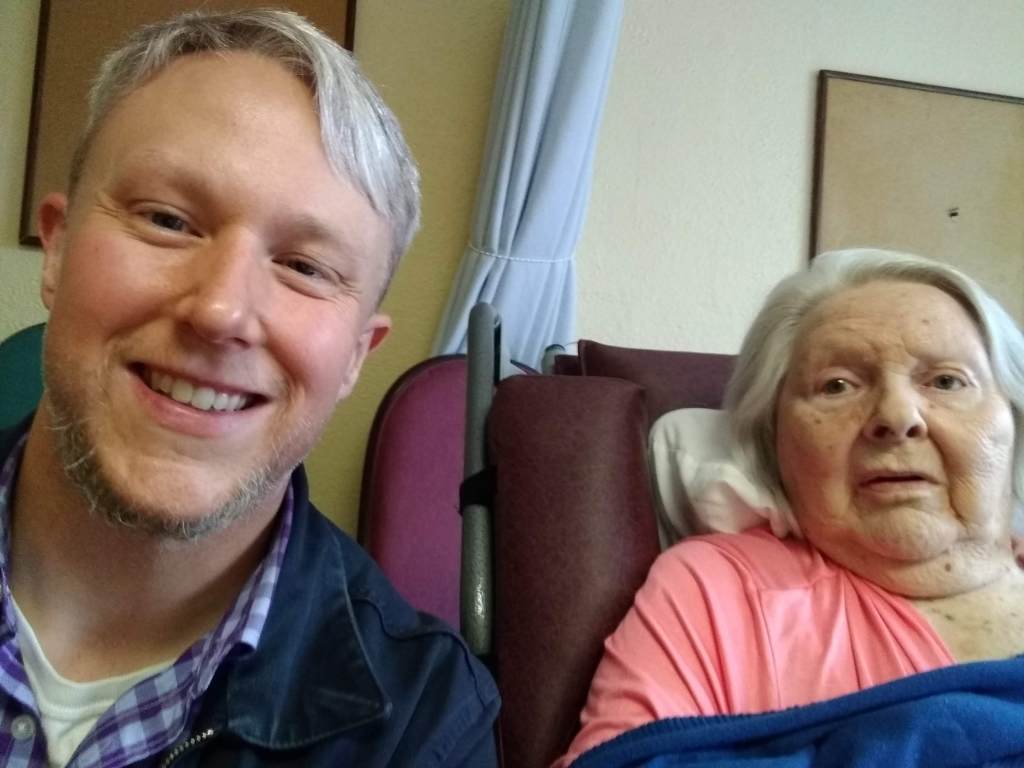
About two years ago, my grandma, Ruth Shannon, was diagnosed with Alzheimer’s Disease. Although I’d read about it and written about Alzheimer’s, it, like anything else, is different when it’s somebody you love.
The first few visits to the nursing home, I went alone. She recognized me, she still does, which I feel pretty fortunate about, but, obviously conversations aren’t the same.
Time is different now for Grandma. More fluid. She asks me about the farm. The place where she spent her formative years, but a place I’ve only visited a handful of times. We talked about fairs — the Great Stoneboro Fair and Sheakleyville — and Christmas. Memories of my youth. Times we were closest.
She’s back, deep in that tunnel. With only a little tiny pinhole light to tell her which way is up. Which way to go. Whether she’s falling or not.
And she can hear us. She knows we’re there. We’re just way at the other end of the tunnel, and that makes it a bit harder to talk.
It would make for a better story if I could say that as I stumbled my way through the darkness, that’s when I decided it.
That just like how Grandma soldiers on through the dark, I decided that I should take on something that seems insurmountable.
You see, since I’ll be turning 40 at the end of the year, awhile back I decided I should run 40 miles and use it as a way to raise money for Alzheimer’s research.
Because it’s not fair that after a lifetime of regimented beauty parlor appointments that Grandma’s hair should fall flat. And that a woman who started her own business in a time when banks told her they weren’t really interested in helping a woman start a business should lose that authority in her voice. It’s not fair that a woman that kept an immaculate living room but didn’t even think about getting mad when I broke her Jesus plate display should not fully understand what me and my sister and my mom and Grandpa say when we say we love her (My Grandpa drives down the hill every day to see the woman he loves, you know. Chances are if you drove past the home today, you’d have seen their big white conversion van sitting out front. That’s real love, if anybody ever asks).
None of it’s fair. And if there’s people out there doing research to prevent this, to keep it at bay, to at least give people a few more, genuine, meaningful years, maybe we can help.
I chose the charity Cure Alzheimer’s because it puts its money toward research and is well rated as a charity. So, consider giving. Maybe $40 or $12.30, because I’ll be celebrating my 40th birthday on 12/30.
I’ll be doing my run on my birthday — Dec. 30 — so I’ll keep donations open for a couple days after, till Jan. 1.
Wish me and Grandma luck. Forty miles is a long way, but from what I’ve seen, Grandma’s journey is much longer.
Interested in donating?
Here’s a link: https://www.facebook.com/donate/852409096133496/ -
Finding finish lines the way runners do
Translating running goals to real life
In one of the commercials he reads for his podcast, “Revisionist History,” author Malcolm Gladwell, who also likes to run, muses that maybe he spends too much time thinking about sneakers and running. He doesn’t make his living with his arms and legs, he explains, but his head and his heart.
In a similar boat, I’m having to justify to myself why I spend so much of my free time not just running, but in the depths of running Youtube channels and running books.
It’s a longshot, bucket-list kind of thing to maybe one day qualify for the Boston Marathon. So let’s call it a goal. Or even to just run a marathon under 4 hours. But, to be sure, neither of those things are why God put me here.

When I think about what I want and need and am actually supposed to do with my life, I can give you goals like being a dad that makes my kids’ lives better and expands their potential; a husband that is just as ambitious; to keep my hometown newspaper going into retirement and beyond; to put to use the writing gifts God hardwired into my brain into publishing a book that affects people.
So why is it that a considerable chunk of my head’s processing power is consistently churning away at running?
Probably because running goals are much more consumable, digestible, even, in some ways, achievable. While physically it’s so much harder, mentally and emotionally it’s so much easier.
For example, I’m hoping to run a half-marathon in October, and in doing so, I hope to do it faster than I ever have before.
I have never been capable of running 13.1 miles in under one hour and 50 minutes, but each day, my Garmin watch feeds me manageable workouts that will likely stair-step me to a personal record.
As someone who came to running later to lose weight, to get healthier and prolong my life, I didn’t know you could do any of that — train to not only complete races, but improve your outcomes — until I decided to tackle a marathon. To run that far, you need a plan. You have to carefully design several days of training every week, building and building and building each week, until eventually you’ve gone from being able to run 26.2 minutes to 26.2 miles.
Some people, when you tell them you ran a marathon, it’s unfathomable. It might as well be a jog to the moon. But you just take it, literally, one step at a time. From lamppost to lamppost; or sidewalk crack to sidewalk crack. Run the mile you’re in, they say; you can’t run the 25.2 others until you have.
Which is, as I work to break down what I’ve learned in running, to translate and apply it to the goals I’ve actually been put on this planet for, maybe the top lesson.
1. Break your big important goal into smaller, bite-sized, manageable goals.
In marathon training, maybe you start with a goal of running 22 miles in the first week, then 25 in the second, climbing each week, until the end you hit 40 or so; I’m working the same way with writing.
In John Steinbeck’s “Writing Days,” he talks about this. Having goals of a thousand words a day, or a few pages. At the moment, a thousand in a day can be a bit much, but I’ve learned, like running, to build. You don’t sit down to write 100,000 words. The first day, shoot for a couple hundred. A couple days later, 500. Then 1,000. Even sticking to 500 words, if you start writing in January, by July, you can easily have a book.
2. Form habits.
A lot of people talk about dreading workouts, but I’ve found that if I do it at the same time every day, if you make a habit of it, you do it without thinking. When I smoked, I popped one in my mouth and lit it without thinking. When I guzzled pop, I’d pop the top and guzzle without thinking.
We just have to use the same slippery slope for good. Instead of packing a pack of cigarettes without thinking, slip on a pair of running shoes, or chug a preworkout drink.
I’ve set a daily alarm on my watch for midnight. Around that time, my wife goes to bed and when the alarm goes off, it’s loud enough to shake me out of my haze. Experts will tell you to have a space devoted to your habit. Like, with running, you go outside, or you hit the treadmill. I don’t have an office, which means I do most of my writing on the coach, a space devoted to Netflix and napping. So, I’ve found when I’m on best streaks, when that alarm goes off, I get up, remove myself from the space, walk on the treadmill for a bit, then come back. If I just pop open the laptop without taking the literal extra steps, too often I just stare at it.
Getting the habit started, and at the beginning, that should be the goal — consistency — can be the hardest part. Once it starts, your brain will start subconsciously gearing up to write even before the alarm goes off..
But while nicotine-fueled habits are hard to kill, good habits are often hard to keep alive. Keep the inertia going. Hit the habit every day. Because once you stop, in my experience, there’s a good chance your habit dies. Fear that death.
3. Don’t give up.
In running, they say the first mile is a liar.
It takes a while for the body to warm up and find some kind of efficiency. Until then, and often after, a part of my brain will chirp away about how it shouldn’t feel this hard. Or that it’s too hot to run today. Or how a nap might be more enjoyable.
The same goes for writing. As soon as I get that laptop open, a small portion of my brain is putting together words for whatever column, article or book I’m working on, but a louder portion is letting me know that I might be tired. And feeling more tired. Or might need a snack. It will remind me how great the show I was just watching was, or how long my day was and how I deserve a break.
Don’t give up. One foot after the other, or word after word. Even if you have to walk, you’re still getting closer to your goal.
The only way to fail, they say, is to quit.
Similarly, it seems, just like it takes a little while to get my heart rate up and my muscles interested in moving, it takes 10 minutes or so for my brain to find and light up the neural pathways I’ve built to facilitate writing.
Be patient. Don’t give up. Just keep moving.
I’ve focused on running and writing because they’re applicable to me, but also because they’re quantifiable.
Being a better dad is a little more difficult. But I think there’s still ways to apply the lessons.
For example, being a better dad has a lot to do with spending time with your kids. So maybe you quantify that by spending at least a day a week doing something that means a lot to them, then two. Maybe that’s riding bikes or playing my daughter’s favorites, ninja turtles and Barbies. Or spending 10 minutes a night with them on homework, then 20 minutes and half an hour.
I am not a patient teacher. It’s something I’ll have to work up to, but something I can accomplish.
As for a better husband, my wife’s love language is touch. Massages and shoulder rubs are something that mean the world to her, and something I don’t do enough. I should set a goal of doing it every week, at least once a week. My hands get tired, and I get bored, but if I focus on how much it means to her, and keep plodding away. Once a week, then maybe twice a week.
Good luck with your goals, and I’ll keep working on translating what works in running to what works for the rest of my life.
-
Does exercise bore you? Invent your own adventure
These are the top three YouTubers for getting a little inspiration to run, bike or just tackle your own cardio caper
At some point, the simple answer is you just have to exercise. Run, bike, walk, lift, kayak, skip, something. You just have to do something for the human body to operate as designed.
And if you can just get yourself into a groove, make it a hard-wired habit of doing it every day or most days of the week, that inertia — along with a good pair of shoes and the right amount caffeine — is a lot of times all you need to get off your butt and run a few miles or lift a few weights.
But even for the most disciplined people, sometimes that’s not enough. Sometimes you need a new goal, or a new adventure to provide a little extra push. And fortunately, we’re living in the golden age for finding those ingredients.
There are hundreds of people on YouTube alone documenting how they push themselves and how they dream up adventures to stay motivated.
Here are my three favorites.
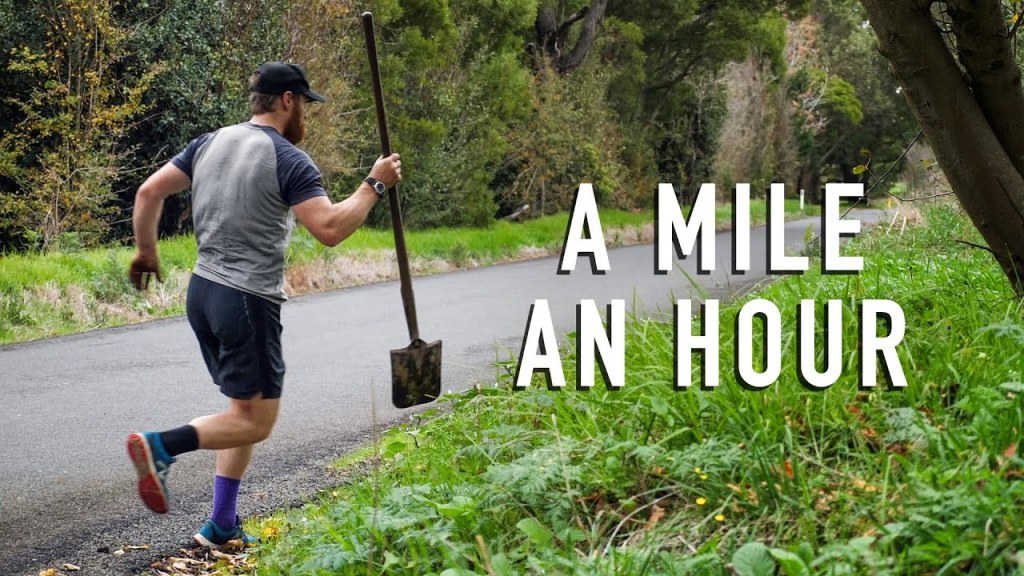
Beau Miles on his Mile-an-hour adventure 1. Beau Miles
https://www.youtube.com/c/beaumilesWhile Beau, an Aussie, has been known to take on a big adventure or two, including paddling a kayak 4,000 km from one side of Africa to the other, the Beau adventures that inspire me the most are the ones that he finds right outside his back door.
He ran a marathon by running about a mile each hour every hour for 24 hours, then spent the rest of each hour working on his to-do list: planting trees, building a table, painting a fence, etc. Another time, he ran 43 km cross country, jumping fences, shouldering through brambles and trespassing a time or two to follow the disappearing path of a defunct rail line. Then, he kayaked one time and walked another his 90 km commute to work. He kayaked to work. Imagine that.
Those latter adventures were spurred on by a rather thought-provoking question.
“Your carbon footprint goes through the roof just so you can find yourself somewhere else,” he said. “Can my commute offer me the adventures of high mountaintops and wide seas?”
The answer it turns out, for Miles — and you and me — is definitely yes.
But maybe there’s a more compelling neighborhood challenge: The Run Every Street Challenge. Try it: https://bit.ly/3PIastB
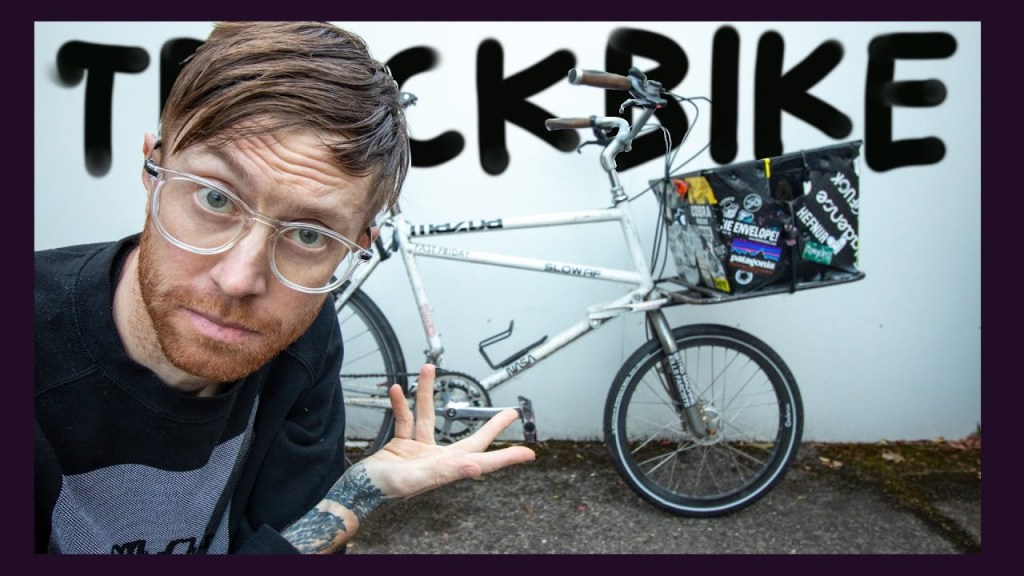
Cyclist/artist Dustin Klein 2. Dustin Klein
https://www.youtube.com/channel/UCV9WtB_q5sJfe3Rev5PWy-QSome of the dumbest things I’ve struggled with in my journey to find fitness that works for me are two questions:
1. What does a runner (or cyclist) look like?2. Do I have to look like a runner (or cyclist)?
My body type and aesthetic bent don’t lend themselves to the short, split shorts and tank tops (singlets) of what you might consider a stereotypical runner, nor the biker shorts of cyclists. It’s one of the reasons I’m a big fan of Courtney Dauwalter, the unstoppable ultra-runner often known just as much for running in basketball shorts as how far she runs in them.
And it’s one of the things that draws me to Dustin Klein. He’s an artist, graphic designer and cyclist in the Pacific Northwest, and that’s what he looks like: a perfect marriage of all those things, with tattoos, stylized bikes and get-ups that look very much like who he is and very little like what might be considered a textbook cyclist.
What keeps me watching are his adventures with his Adventure Squad cycling pals, up mountains; across logging roads; long, designed biking routes through both and through urban stretches to find beer, food and adventure. Dozens of miles, if not a century or more at a time. Shot in a unique, fun, quirky way that catches all the splattered mud, the egg sandwiches, and overnight van adventures.
I’m very much more a runner than a cyclist, but there’s a handful of bikers that make sense to me.
Ted King, who has retired from being a professional road racer to the gravel scene is another: https://www.youtube.com/c/TedKingoftheride/videos
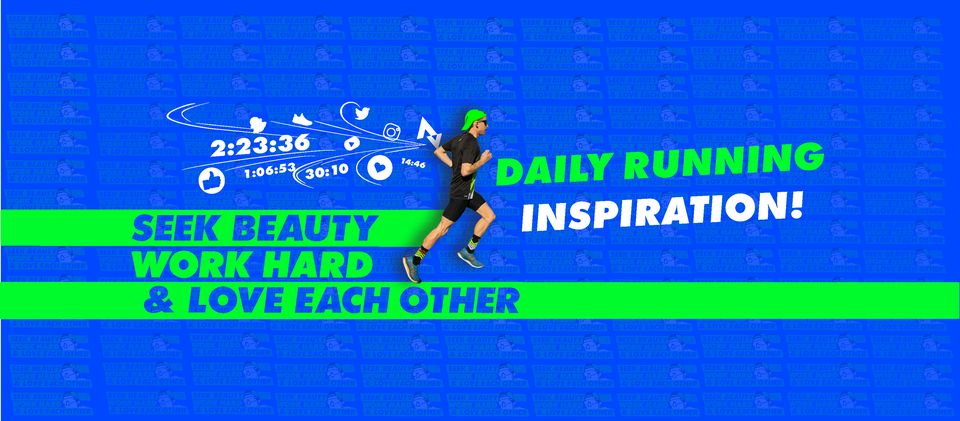
3. Seth James DeMoor
Demoor Global Running.
https://www.youtube.com/c/SethDeMoor/featuredHe’s won the Pike’s Peak marathon (which involves more than 7,800 feet of climb) twice, and we’ve watched him win the Gasparilal half-marathon in Tampa Bay this year, not to mention adding his fifth child to his family.
We watch him get up hours before dawn and run up Pike’s Peak in a weighted vest. He takes us with him on his track workouts, and shows us how he rehabs and prehabs injuries. We see the work he puts in to grow his Youtube audience, and his mindful efforts with his growing family.
As someone who is very much a recreational runner, but still looking for ways to run faster and longer, as well as how to hone that work ethic to apply it to the rest of life, Seth is one of my go-tos. We get an up-close look at what does and what lengths he takes to push to the next level — we get to see the work it takes to win a marathon — and he does it in an entertaining, consumable way on a nearly daily basis, perfect for someone who needs new content daily for the treadmill.
Are you having luck building your own adventures? What’s your tip?
-
Can inspiration be a guilty pleasure?
Nope
What is someone in their 40s supposed to listen to? Wilco? Snoop Dogg? Neil Diamond?
I hit the big four-oh in December, and maybe it’s midlife anxiety, but I’ve found myself lately listening to a lot of a band I consider a bit of a guilty pleasure.
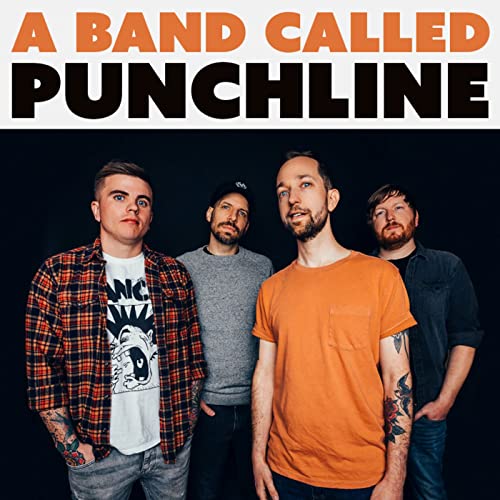
They’re called Punchline, a pop-punk four-piece from Pittsburgh, that may never get as big as Blink 182, but was just as huge or bigger for me in my formative college years.
I’d gone to shows and festivals in high school, but always with friends I’d known since elementary school. People who had only seen out of me a pretty predictable range of behavior. I might nod along to a good song, or maybe shout some lyrics if things got wild enough. But rarely was I brave enough to stray out of that rut.
I found Punchline in college, still going to shows with those friends from home. But now, because I was living just a short walk from Punchline’s home venue — the former Club Laga in the city’s Oakland neighborhood — when my friends couldn’t go, I just kept going.
I wondered what it would be like to be someone who wandered into punk shows by himself, and found myself straying from the edge of things into the swirling heart of the crowd, into some Bermuda Triangle, where all the energy amplifies in front of the stage.
These weren’t metal shows. There wasn’t a pit. Or a lot of elbows.
But there was a mass of kids my age that swelled and crashed with the peaks of every song. And that close to things — to the stomping guitarists, the pounding bass drum, the overpowering speakers — you didn’t just hear it, you were enveloped in it. It rattled down your bones, curled around your ribs and set your heart arrhythmic.
I discovered a lot of music in my four years in Pittsburgh, some of the most meaningful songs and albums of my life, but if I had to pick one band that defined it all, it would be Punchline and it was those nights.
So why would I use that unenviable phrase, guilty pleasure?
Because you’re supposed to outgrow punk, right? Because songs about heartbreak are only for teenagers? Because it’s too fast and loud for people who tuck in collared shirts to go to work?
At some point, we tell each other, it stops being cool to get too excited about anything.
But why is that?
On the hard days, I load up on caffeine before a run just to get in a few miles. Drafts of this essay lingered in my gmail for weeks, as I stumbled around, waiting for the gumption to finish it.
Like the last time I ran the Pittsburgh marathon. At some point I’d burned through every ounce of energy and inspiration I’d carried with me, and found myself searching not for reasons to go on, but reasons to quit.
Until, as if by fate, Punchline started blasting through my ear buds.
“This is right now,” screamed bassist Chris Fafalious. “Time to back up all your big words and live your life you want to.”
It’s not Dylan, but the plodding “Times They are a-changing” also wasn’t going to get me up Pittsburgh’s last hills.
That perfect mix of power chords, punk harmony and Punchline attitude blasted me back to that sea of college kids, being thrown about by power chords and cymbal crashes. And blasted me to the finish line (as finishing, when running marathons, ends up being my one true goal.)
Still, today, a well timed Punchline anthem at the right volume can get me through the hardest runs.
So, in a life where we find ourselves stuck in front of televisions, dreaming but not doing, with a very limited number of days allotted to us to accomplish all we’re meant to do in this life, why feel guilty about anything that keeps us moving or that gets us up off the couch?
If that scene from “Dirty Dancing” amps you up as much as Luke dueling Vader; or if the Backstreet Boys shoot adrenaline right into your heart like “Paint It Black” or “Voodoo Child,” why waste a second feeling guilty?
If you find a wave taking you where you want to go, sometimes you just have to ride it.
-
Eat religiously
Because I think God wanted you to eat healthy
I think we’ve all heard by now that, give or take, our planet is the perfect distance from the sun. Much closer would be too hot. Much farther, too cold.
In either case, life couldn’t exist. While apparently perfect, even on this planet, we need oxygen to breathe, but there are plants to make it. And we need some way to get that oxygen to our brains and all our tissues, but we’ve got red blood cells and hearts just the perfect size to pump them there. And those hearts, we don’t even have to tell them to do it. They just do it.
We just have to fuel them. And as luck would have it, there’s a perfect system for that, too. A perfect, but complex system that breaks down protein, fat and carbohydrates. And to get those proteins, fats and carbs, all we have to do is pluck an apple from a tree. Or blackberries from a bush. Or even eggs out from under a chicken.
I don’t think it’s too controversial to say that God did all of this. That a grand designer, with infinite wisdom and knowledge put us exactly where we needed to be with exactly what we needed to survive.
We’re all on board with living in Earth’s average temperature of 57F, compared to Mars’ -81F or Mercury’s 354F, but on food we think we can do it better.
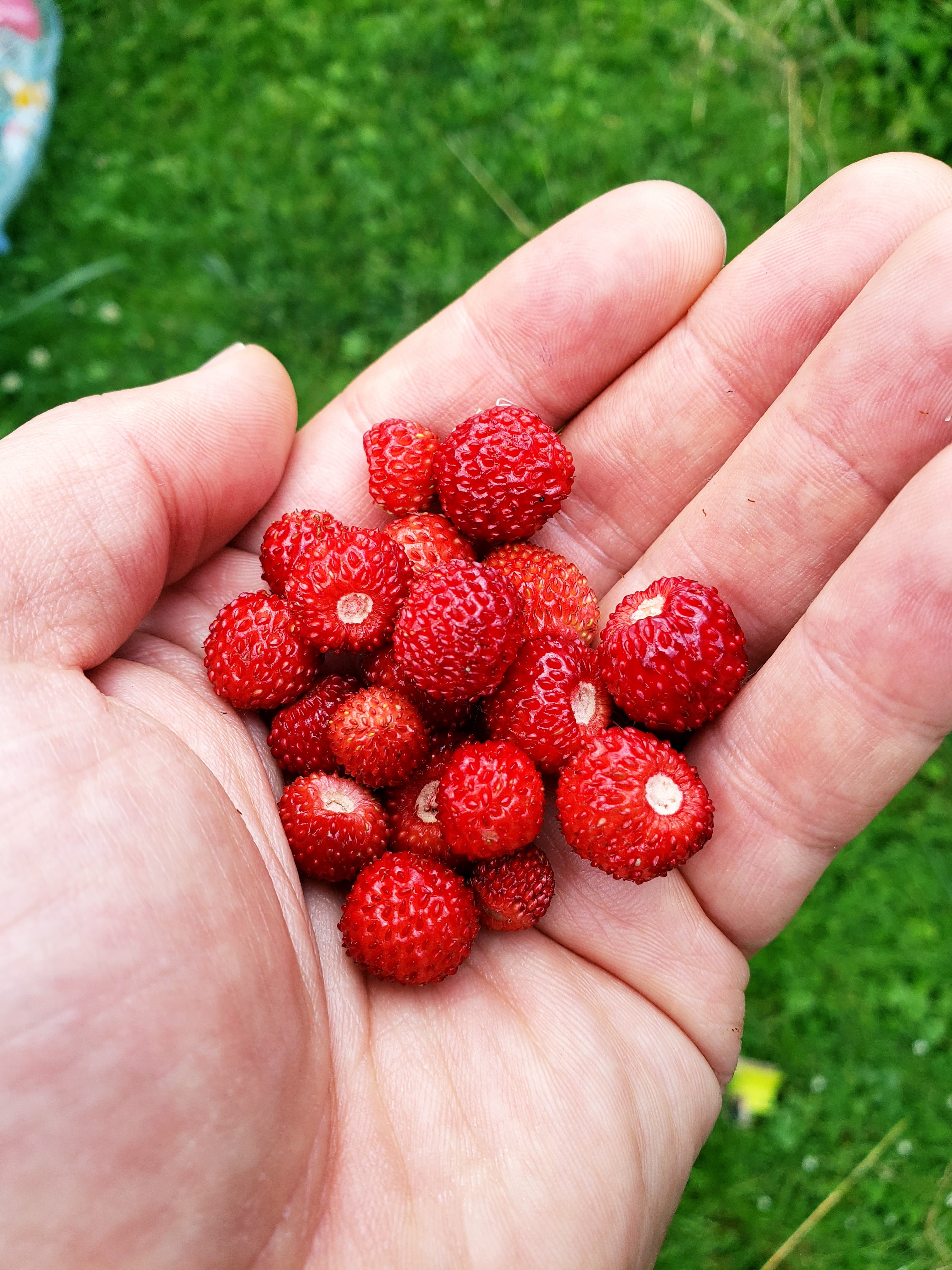
Here’s an example.I can walk out my back door right now and pick a handful of alpine strawberries (pictured). I didn’t plant them; I didn’t water them; all I did was pick them and wash them and throw them in my mouth, and I’m rewarded not only with a pretty satisfying sweetness, but an endless list of nutrients and antioxidants, as well as a little bit of fuel to power my body.
With the same amount of effort, I could pop open a bag of Oreos, and pretend like I’m going to eat just one. The super processed sugars will quickly soak in through my digestive tract, get shot right into the pleasure centers in my brain, and quickly I’m locked in this loop of “Ok, just one more Oreo.”
Quickly, at roughly 50 calories per cookie, I’ve hit and sped past 200 calories, and they’re calories that are pretty empty.
The handful of strawberries is roughly 50 calories, too, but in addition to feeling like I only need to eat one handful, I’m also getting vitamin C, calcium, vitamin K and a whole bunch of other stuff that promote insulin sensitivity, which helps protect me from diabetes, as well as stroke, cancer and others.
But you might say, well, vitamin C is great, but berries don’t have much protein. Sure, but a handful has roughly the same amount as an Oreo
So what does it mean to me to eat religiously?
I’d say it means that, like everything else, God designed food pretty well. If all you have to do is pick something and wash it, it’s probably pretty good for you. And in the case of blackberries, blueberries, tomatoes, etc., there are few things better.
Beyond that, the less you have to mess around with food the better.
Like eggs. Boil them or scramble them, that’s pretty easy, and pretty nutritious.
The conversation with meat becomes a bit more complex. Slaughtering chickens and beef, etc., is a pretty involved process, and there’s constant research weighing the benefits of lean red meat vs. the possible elevated risk of stroke, some kinds of cancers and other dangers, but there are few things healthier than a simply grilled chicken breast of salmon steak.
And on other hand, it might be pretty interesting (terrifying?) to see how many steps it takes to get from farm to table for Oreos, Cheetos, and other food products with unidentifiable origins.To be sure, I also believe God wanted us to enjoy life, too, so a treat here and there, won’t hurt, but for everyday purposes, I’d say pick the strawberry over the Oreo.
We’ve been given everything we need. Sometimes it’s best not to over complicate things.
-
Are hard-boiled eggs the perfect food?
Super portable, low-cost, high-protein, low-calorie, and with an egg cooker, super easy
For the first three decades of my life, my only metric for what I put in my mouth was what’s most delicious.
Pepperoni strombolis. Oreos, KFC. Pepsi.
Then, come to find out, that even at the age of 30, all of that food can jack up your blood pressure high enough to put your long-term vision and hearing — the delicate tissues of your eyes and ears — at risk.
So at the age of 30, I started adding new metrics.
I needed to lose weight, so calories were an important number. I needed to put on lean muscle so I could burn fat, so protein became an important number.
Taste is still a factor, to be sure, but another one that might by nearly as big is ease of effort. It’s why we stress eat chips and M&Ms. They’re handy. There’s no prep time.
So with that in mind, what’s the perfect food?
Bananas? They’re super portable and delicious, but a little too high in carbs to be considered perfect.
Grilled chicken breast? Taste is a 10; they’re high in protein and low in calories; but de-packaging the meat, lighting the grill and seasoning loses it points.
So, our winner may just be the hard-boiled egg.
Barring the banana, few foods are as portable. They taste fine themselves, are great on a salad, and mash them up with some Greek yogurt and mustard, spread it on toasted wheat bread, you’ve got a pretty tasty, healthy, easy sandwich. (Light mayo tastes a little better, but give Greek yogurt a try. You’ll be surprised.)
For the time being, they’re still super affordable, and the bioavailability of their protein — the ratio of which your body can readily access and absorb the macronutrient — is higher than beef, chicken, fish. Virtually anything.
But you’re asking yourself, what’s easy about hard-boiled eggs? Who has time to fill a big pot, boil the water, boil the eggs, time it perfectly, drain them etc.
One little machine erases all of it.
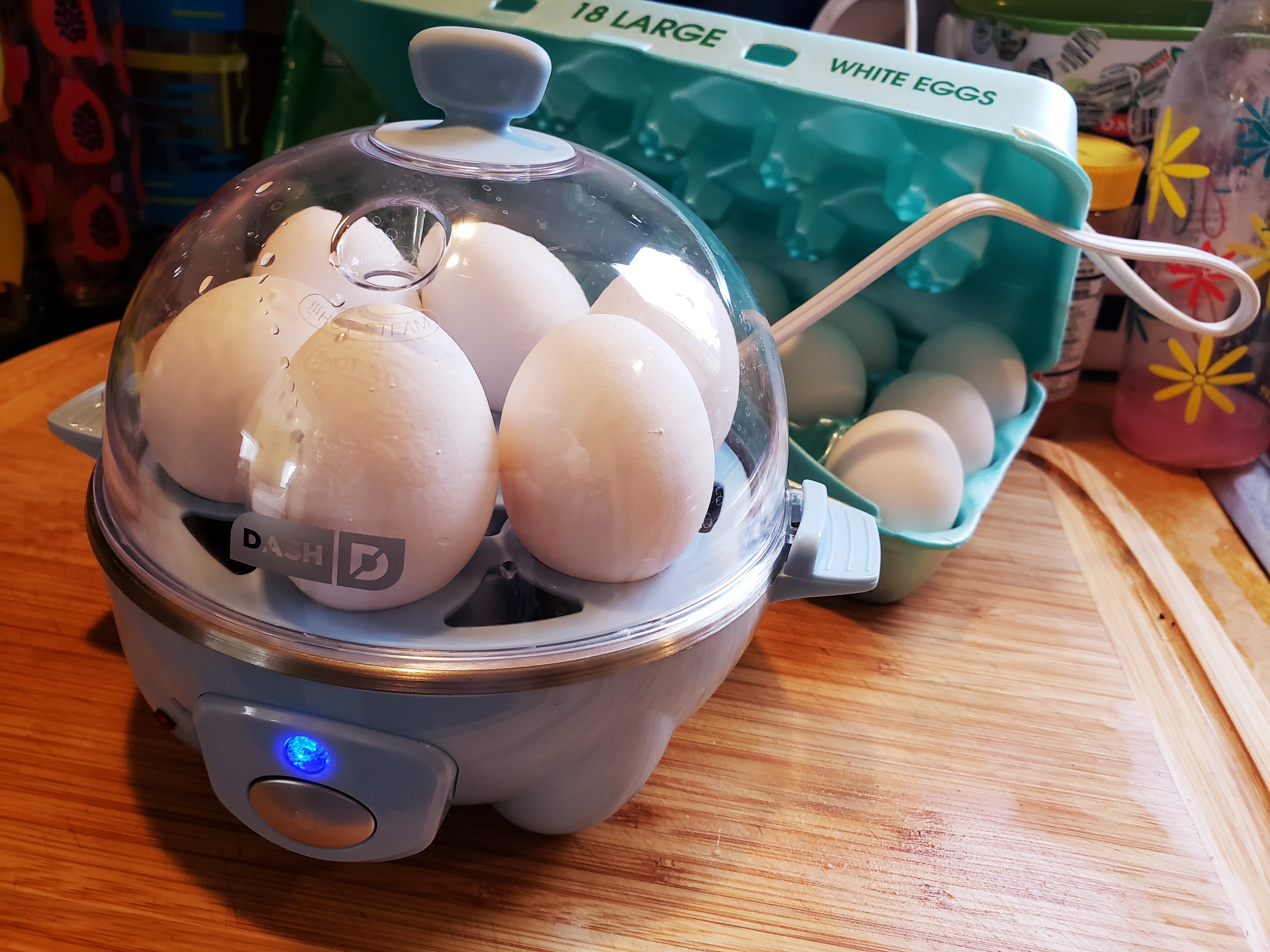
What we have now is a Dash egg cooker.
But we’ve used other brands that work just well, and under $17 are just as cheap.
How’s it work?
It’s even easier than a rice cooker.
You throw in six eggs, a little bit of water, put the lid on, you walk away, and in just a few minutes it plays a little song to let you know you have perfectly cooked eggs for a salad, for a sandwich, even to eat whole, like some kind of large, pale, protein berry.
Worried about cholesterol and fat? Don’t eat the yolk. That’s where all that stuff is, and it’s easily removed.
Even my kids eat them.
The low-calorie, high-protein, low-cost, super-portable, kid-friendly wonder food that you’re likely under utilizing.
-
Stealing souls vs. steeling souls
If things are hard for everybody, now’s our chance to do more
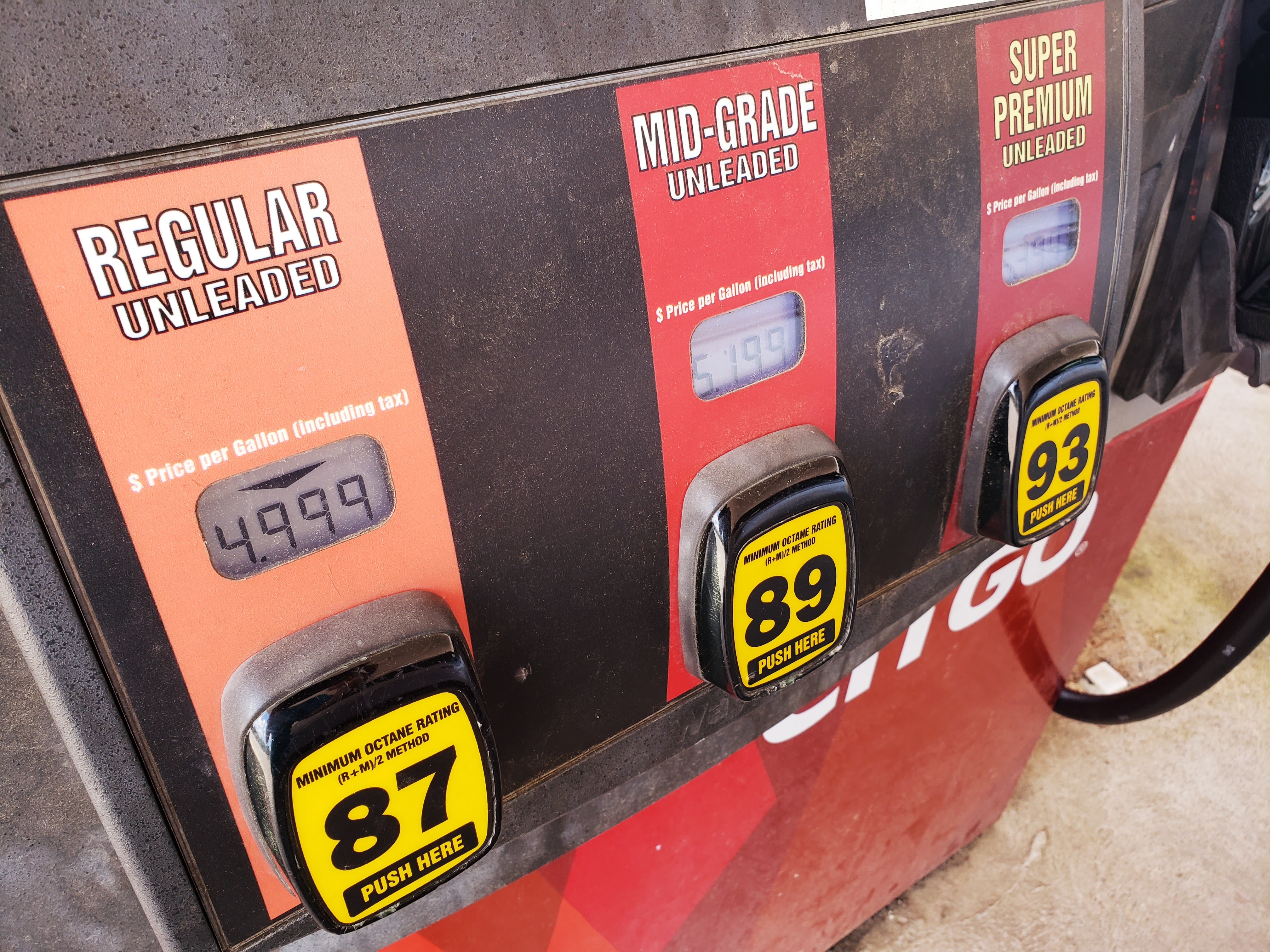
A gas station fill-up is $25 bucks more than it was just a few months ago. A stop at the grocery store has grown by $50.
Most of us keep working harder, but our paychecks just seem to feel smaller; and every minor accident — the TV the three-year-old pushed over and the toaster that randomly died — feels a little more major.
It’s money I should have been saving. It’s my goals getting a little further down the road.
And while that’s true, what I try to keep in mind is that while things are hard right now — harder at least — they’re hard for everybody.
Each fill-up hurts, but they hurt for everybody. Every one of us is trying out the store brands to see if we can eat generic ranch without getting too sad.
So, instead of getting discouraged, I feel like we have a couple options — stealing souls or steeling souls — neither as sinister as they might sound.
When retired Navy SEAL David Goggins was going through one of his three Hell Weeks to make the elite squad, being broken mentally, physically and emotionally, he realized something. He was suffering. He was shivering uncontrollably in the frigid water — jackhammering, they called it. His body was broken, literally. He developed stress fractures in his legs that he wrapped with duct tape so he could keep going.
He was suffering, but everyone was suffering. Everyone on that beach. Everyone that had ever been on that beach.
Part of the trials of Hell Week was, as a crew, having to carry your boat around, even after being pushed past exhaustion.
Goggins came to understand something, though, and he explained it to his crew. Instead of sulking around, laboring under this boat, they pushed it up into the air. They were yelling, hollering.
“You can’t break Boat Crew 2.”
Then they watched the life drain from the eyes of everyone around them. Even the instructors, who had gone through Hell Week themselves, and couldn’t believe what they were seeing.
As that energy left their bodies, Goggins said he and Boat Crew 2 essentially harvested it, fed off it. It was a shot in the arm.
He calls it taking souls.
I think one take-away now, in 2022, as inflation and gas prices grow, is that we’re all facing the same things.
We all suffered through the loss, the sickness and isolation of the worst parts of the pandemic; and we’re all facing thinning bank accounts as gas prices, grocery bills and everything else tick higher.
It’s enough to hold you down, to make you give up, or at least not attempt the things you’re destined to do. Maybe you don’t start that business you’ve been dreaming about, or you’re so down you don’t sign up for your first 5K. Maybe you stop creating and stop dreaming.
But why? We’re all starting from the same starting line. Gravity is still a constant; it’s not more powerful for you or me. We’re all facing the same weather, the same elevation. We’re all running up the same hill.
We’re all having to work harder just to maintain. But if that’s enough to keep other people from starting, or to slow them down, that can be our advantage. If everyone else is moping in the humidity, you can sprint ahead. This can be your race. This can be your biggest win.
It can be an opportunity.
But there are others.
If that’s stealing souls, we could also steel souls.
If everyone is struggling, now is an incredible opportunity to help. The need is everywhere. For food. For love. For support.
With grocery budgets stretching less and less far, a donation to your local food bank is so valuable right now. Or donate by working a community dinner, or a soup kitchen, if that’s what’s in your neighborhood.
Or offer a good word. A compliment.
Nice run. Awesome spreadsheet. Perfect hug.
It’ll go a long way.
Inflation actually works backward in this instance.
Good deeds will go farther than they ever have before.
-
The super secret power of salads
Some say salads aren’t cool, but if you can figure them out, they will help you live your life
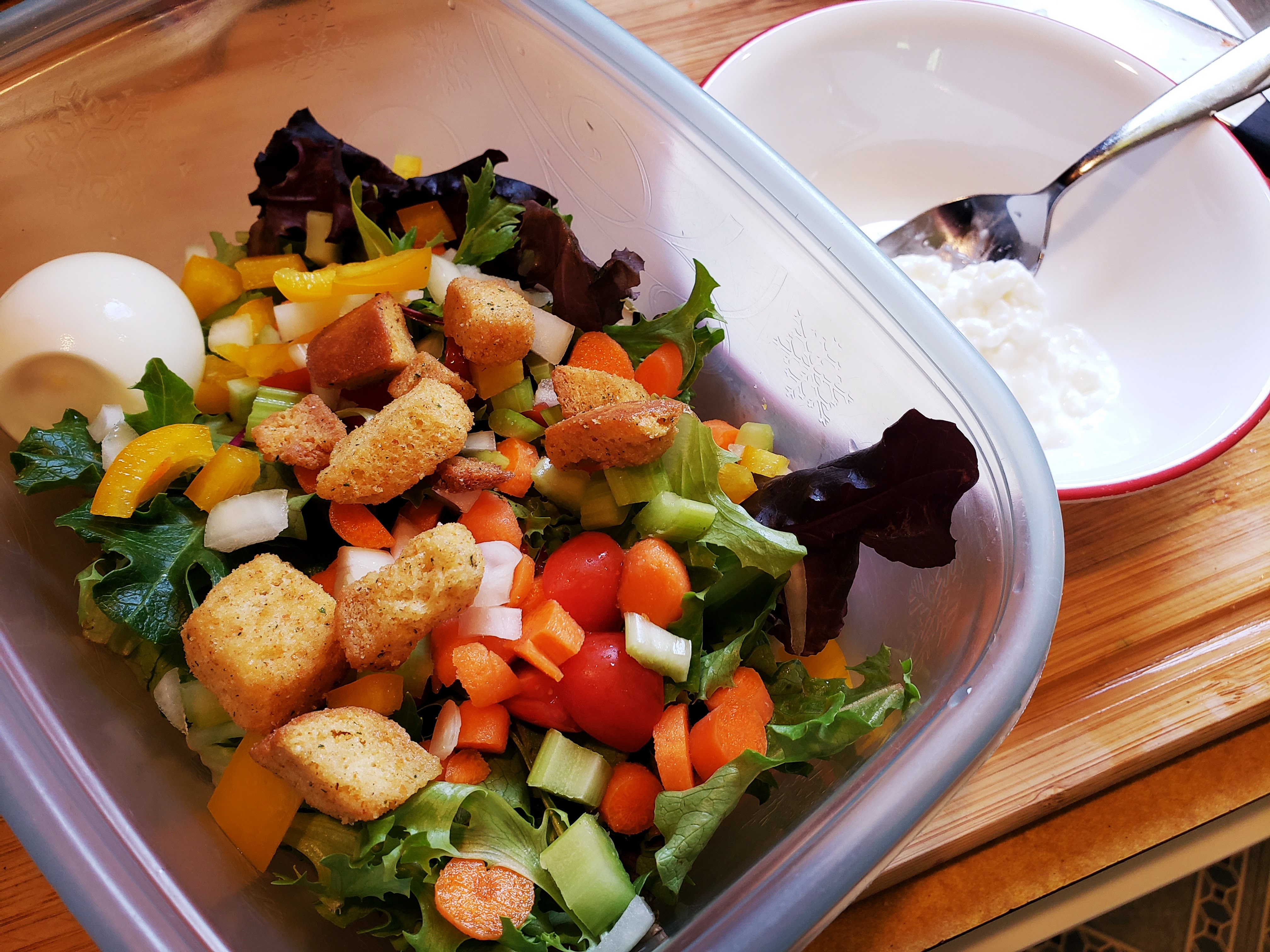
Because lunch too often was a large Big Mac meal that made it nearly impossible to keep my head off my desk past 3 pm, I’ve had to figure out diet hacks to not only keep my blood pressure and weight down, but also remain a productive member of society and the newsroom through the afternoon and into the evening.
Through years of trial and error, much like establishing a consistent running habit, one of the the biggest keys to turning things around for me has been the almighty salad.
I lived through the Five Dollar Footlong era, when we thought eating a loaf of bread laced with processed meat, was the way. Then the wrap fad. But the low-carb, high-nutrient, high-fiber salad is the only thing that consistently keeps my blood sugar and energy level steady till dinner.
Most people will tell you to throw a handful of spinach and kale in a bowl, toss with olive oil and lemon juice and have at it.
That would be awesome if that worked but it doesn’t for me. And I have a feeling it’s not realistic for most people.
Here’s how to make the almighty salad work for you:
1. Experiment with different greens and different mixes.
Growing up in a fiscally conservative middle class home attending public school, I thought iceberg was the only option.
Then I read that spinach and kale — uber dense in micronutrients and antioxidants — are all you should consider. But kale’s a little bitter and rough, and spinach can be a bit leathery.
Unless you mix them up and mix in a little romaine.
The ideal mix for me is a little spring mix and a little spinach, topped with some romaine, which for me is one of the more palatable greens.
There’s also arugula and all kinds of leaf lettuce. But only you know what’s right for you.
Getting a little spinach in your life will go a long way, but if all you’re willing to stomach is iceberg, and you’re topping it with other veggies, all instead of cold pizza, then that’s a win.
2. Find your toppings.
Like pizza, toppings can make or break a salad.Figs, feta and olive and you’ve got a nice Mediterranean treat. Chicken, cheese and hard-boiled egg and you’ve got a nice protein mix.
Celery is good for recovery, dried cranberry can bring some sweetness and it’s hard to go wrong with chopped carrot.
I worry about putting too much sugar in my salad — i.e. dried fruit, fresh fruit, candied nuts — and tend to stick to basics like carrots, tomatoes, celery, onions and peppers, but again, if it’s helping get leafy greens into your bloodstream, then you should probably do it.
For example, I have to have dressing on my salad, and I get pretty bummed out when I forget the croutons. They’re not the healthiest part of my salad bowl, but they provide the flavor and crunch that make me willing to chomp down a salad every day.
Why are leafy greens so important?
For someone looking to lose weight, they’re virtually calorie free. There are fewer than 10 calories in a cup of spinach, which means, if you wanted to, you could eat it all day. They’re also so packed full of vitamins that make them a huge boost to brain, heart and immune health and more.
3 . Keep it simple
I don’t know that the goal should be to eat a salad every day, or every work day, but it works for me. And part of that is keeping it simple.I gotta make my salad, get my kids to school, and get a run in before I can even start my day. I can’t spend all morning chopping vegetables.
I tend to throw some spring mix/spinach in one of my trusty lunch containers, top with some romaine, then chop up three vegetables. The most common are carrots, peppers and tomatoes. But pickled peppers, onions, and olives often also make the cut. Then throw on some croutons. Virtually every vegetable you add is adding new nutrients, and these ones work for me.
4. Dressing
Dressing is also a key. If you find yourself not falling into a rhythm with your salad, or slowly losing interest, head to the dressing aisle. There are a million options, and each one adds a new dimension to the meal. I try to stick with low-calories and low-fat options, but sometimes, when I’m feeling in a funk, I’ll pick up that bacon ranch. And it works. Sometimes just eating the salad and finding some kind of enjoyment out of it is enough. And honestly, eating a salad with bacon ranch actually feels better than a big bready sandwich, or even a wrap.
Be careful of serving sizes. Don’t douse your greens. Try measuring it out the first few times to get a feel for the serving size. And best practice is to not eat a bacon-based topping every day. But at the same time, I feel like you have to find a way to love your greens.
5. Get some protein in there
For me, one of the most important effects of eating a salad is that I’m not hungry afterward. Struggling with weight for decades, after eating pizza, fries, sandwiches, etc., I’d either have trouble getting myself to stop eating, or very quickly I felt compelled to eat again.Refined carbs shoot right into my bloodstream and satisfy metabolic needs very quickly, but also very temporarily. Your body shoots out insulin and starts storing energy as fat. And your body also loves that feeling of quick, easily accessible energy and will crave. It will tell you it needs calories even if you very clearly don’t. It can feel like mild addiction.
Protein helps stop that. Protein and fat can slow the release of sugars into your blood, making most energy sources more sustainable.
Although spinach and most leafy greens are pretty slow burning fuels, carrots, tomatoes, croutons and most salad dressings surely have some sugars.
I treat lunch like drinking. Instead of having a glass of milk and some bread to coat and prepare the stomach before heavy alcohol, hard boiled eggs and cottage cheese prepare my body for carbs.
For me, all of it has to be easy. Grilling chicken in big batches to throw on a salad is a great option, but hard boiled eggs and cottage cheese are just so much easier.
Hope this helps get salads into your lives.
It’s some of the cleanest fuel you can find, and the cleaner I eat, the better I run, the faster I recover, the happier and more balanced I am. And when all those things are true, I’m a much more pleasant and productive human.
-
Keto lessons
And how to use protein to curb hunger, curb fat
It may be hard to tell behind that mask, but I’m smiling.
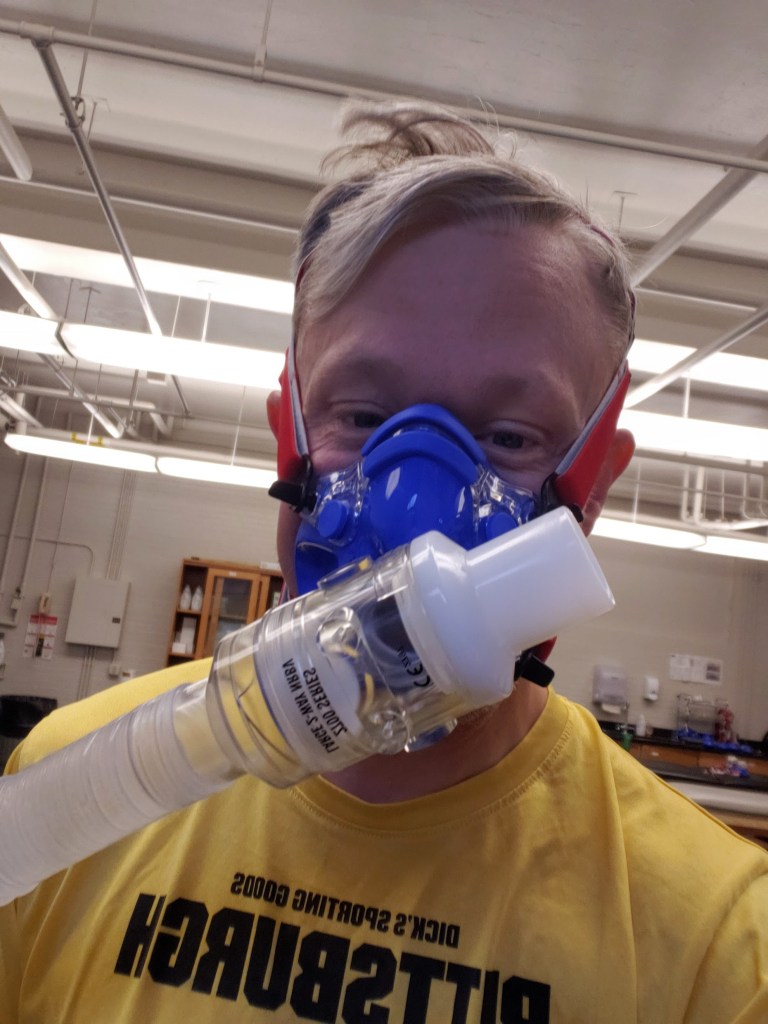
I’m about to run a half-mile as fast as I can, have some blood squeezed out of me, and then do it five more times.
I’m smiling because once that final interval was run, I was free. Free to eat pizza and bananas and all the Little Debbie Christmas trees I could fit in my face.
In this selfie, I’m on a treadmill in a Grove City College lab for my final round of testing as part of a three-month study. After a month on a high-carb diet, a month off, then this final month of the super-low-carbohydrate keto diet, the mask and attached tube would help measure how much air I was pulling in, how much oxygen I was processing, and how efficiently. The blood samples between each round were to look at things like blood lactate, a byproduct of anaerobic exercise, or what happens when your body can’t keep up with the oxygen demands of what you’re putting it through, like mostly sprinting half a mile; and ketones, or what’s created when your body burns fat for energy while in ketosis.
The doctors running the trials are taking a closer look at what’s become somewhat of a consensus with regard to the keto diet.
For this version of the diet, I had to live off a maximum of 50 grams of carbs a day, or about two bananas. Normal humans burn carbohydrates for the fuel to run, walk, live, but if you restrict your carb intake enough, you can force your body to burn fat instead. The current consensus, basically, is that fat is an inferior fuel for high intensity exercise. Other studies of runners have found that fat’s not too bad under easy paces, but once you kick it into that higher gear, you lose power.
These docs don’t think that’s necessarily the case. And apparently, my early results back that up. After a full month of the high-carb diet, my mile time was around 6:48. Which, I didn’t know I could do. After a month of spreading out the amount of carbs I had been eating in one day across an entire week, I was at 6:51. For me, still not, too shabby, and not a major difference.
Most people don’t really care about what your mile time is after a month of keto, they want to know about the weight loss.
So, I didn’t go into this looking to lose weight. After my big initial weight loss of 50 pounds about seven years ago, I’d only gained back about 10 of it. I felt pretty comfortable.
Even on the high-carb diet, just keeping track of my calories while maintaining roughly the same amount of miles per week (around 40) I lost about 10 pounds. Without really trying.
People who have lost weight can tell you that it’s not easy to lose 10 pounds, but it’s even harder to lose the next 10 pounds. Which is what happened on keto.
Again, I wasn’t trying to lose weight. I wasn’t striving for any big calorie deficit. I wasn’t hungry. But over that 35 days of keto, I lost 10 pounds. I went from about 160 to about 150, and was down to 12 percent body fat. If I wasn’t full-blown Protestant, I’d probably post some shirtless pics, because it’s probably never getting any better.
That being said, for me, it wasn’t worth it. I’ve always struggled with weight a bit because food makes me happy. Over the last several years, I’ve worked really hard to find foods that are healthy, while still making me happy, and not being able to have any bread, any pasta, most fruit, even some vegetables, I wasn’t happy. Or, at least not as happy as normal.
As one example, from my niece’s birthday party of pizza and cake — two of my favorites — I had to excuse myself so I could go grab some health food: a bunless Whopper from Burger King.
Most dinners were sausage or hot dogs and sauteed onions and peppers. Everything cooked in a lot of butter (The key to keto, in addition to restricting carbs, is eating a lot of fat. My fat intake was roughly 75 percent of my total calories). Every snack was cheese (most Swiss has no carbs). And basically every breakfast was eggs.
I was eating hamburgers, hot dogs, sausage and bacon and losing weight. Which I bet for some people sounds amazing, but it’s not.
My guts didn’t feel amazing. And my running suffered. A lot of days at mile three or so, I’d get too nauseated and have to walk for a bit. Not ideal.
As soon as that morning of testing was done, I literally went up the street to grab a Little Ceasers’ Hot & Ready pizza, a couple pops, some Doritos and some Little Debbie Cupcakes, and ate nearly all of it, as I drove home in a rush to get to my first meeting of the day. That kind of desperation is not manageable.
So, for me, bottom line, keto can definitely work. But it’s also definitely not worth it.
The doctor I worked with got it. He suggested instead of limiting myself to 50 grams of carbs, maybe try 100. So, here, after the holidays, I’ll do some experimenting. Keto isn’t fun, but now that I’m the leanest I’ve ever been as an adult, I’m also running faster than I ever have, which is pretty fun.
Here’s hoping for balance in 2022.
-
Subscribe
Subscribed
Already have a WordPress.com account? Log in now.
 Have you thought about this?